
The Science of Feel — Why Touch Still Matters in a Digital World
EDUCATION
1/10/20263 min read
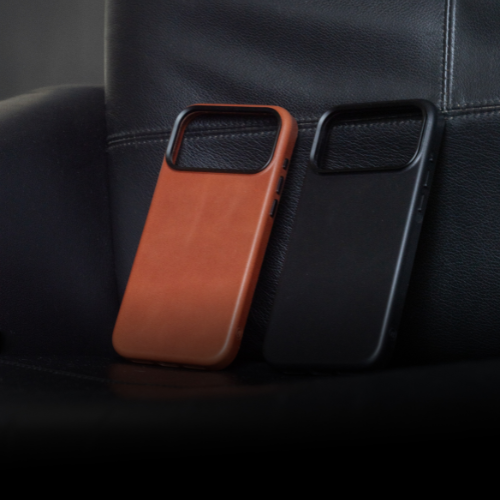
We swipe and we click, but many of the things we interact with are miraculously out of reach. Human though we are, the urge to feel remains. The supple texture of fine leather. The way a well-crafted object rests in the palm. The warmth of something made beautifully by hand. The real, the genuine — it’s conceptual, and we feel it in our hands. It’s substance over screen. And that’s where the art of the tangible, the tactile, the real, touches the heart. In the realm of design. In the touch of emotion.
The New Way to Feel
Touch is among the first senses we acquire in life, and among the last to leave. It roots us in the world and changes the way we understand comfort, trust, and even beauty. And touch in great design speaks to more than just our fingers. It communicates quality on a cellular level.
Close your eyes and compare the feel of a luxury leather iPhone case to traditional plastic. Instantly, the leather has a softness and substance that make you feel at ease. Inhalation releases the fresh perfume of quality, that woodsiness indicative of the real deal. And how the edges fold over the fingers, how it doesn’t quite yield to the touch… it all adds up to a sense of craftsmanship, attention to detail.
Artisans like Ryan London instinctively know this to be true. They specialize in the finer points of handmade style, an understanding that design isn’t an abstract concept. It’s something our fingers can explore, our noses can breathe in their intricate perfection. And that level of dedication turns simply perfect objects into perfect connections. They make it possible to touch the soul.
Finding Beauty in Touch
Luxury isn’t about what you see; it’s about what you feel. The heft of a handcrafted object, the touch of fine materials, the smell of real leather. Quality is about emotion — and the material reminders that something was made with care.
That’s why a tactile approach to design is gaining momentum in the digital luxury space. While screens excel in speed and convenience, they aren’t emotionally engaging. Physical objects, on the other hand, are rich in texture and depth — calling our human memories and emotions to attention.
When you touch a luxury tech accessory crafted from real materials, a silent conversation between you and the object occurs. That connection doesn’t wane; it grows. It’s why so many of us hold onto that old leather wallet, that weathered jacket — not because it’s perfect, but because it’s alive.
Raw as Opposed to Synthetic Design
In the mad rush to minimalism, modern design has become too clinical, too polished, too synthetic. But humans aren’t sterile. We are drawn to imperfection — to contrast, to grit, and to warmth. Forward-thinking luxury brands now understand that flawlessness does not equate to perfection. Material honesty does.
It’s that principle that informs everything about Ryan London. Their luxury leather iPhone case wasn’t designed to conceal the phone — but to humanize it. Each natural grain of leather is one-of-a-kind, every blemish a tribute to the craft of authenticity. What results isn’t just an accessory; it’s a rebuttal against the dehumanizing nature of modern technology.
The Human Comes Back to It
As we continue to barrel through the digital age full-throttle, the pendulum of culture and human needs has begun to swing in the opposite direction. We’ve woken up to the fact that while technology has connected us globally, it has nonetheless fragmented our senses. Leather’s warmth, the smell of handcraft, the feel of something born from skin — it’s as if the virtual has stripped us of our natural existence on this planet.
When you hold a Ryan London case, you’re not just holding handcrafted tech protection; you’re holding the manifestation of a philosophy — one that believes luxury ought to be sensory. This is tactile design at its most elegant — eye candy that’s also heart candy.
Touch of Forever
In the end, touch equals memory. It’s the invisible line that keeps us connected to our moments, our people, our objects. The delight of carrying a beautifully treated thing around. The hushed pride of owning things well-made. The unsolicited warmth of something that truly belongs — it’s all stuff that screens can’t pretend to reproduce.
In a digital age so seduced by the virtual, Ryan London is the gentle reminder that luxury is not the short-lived excitement of the new, but the permanent satisfaction of the tactile. At its base level, the study of touch is really about the exercise of love — and proof, if further needed, that all questions of design — like all questions of the heart — come back to what we can still grab onto.